
Three cues, deliberately removed
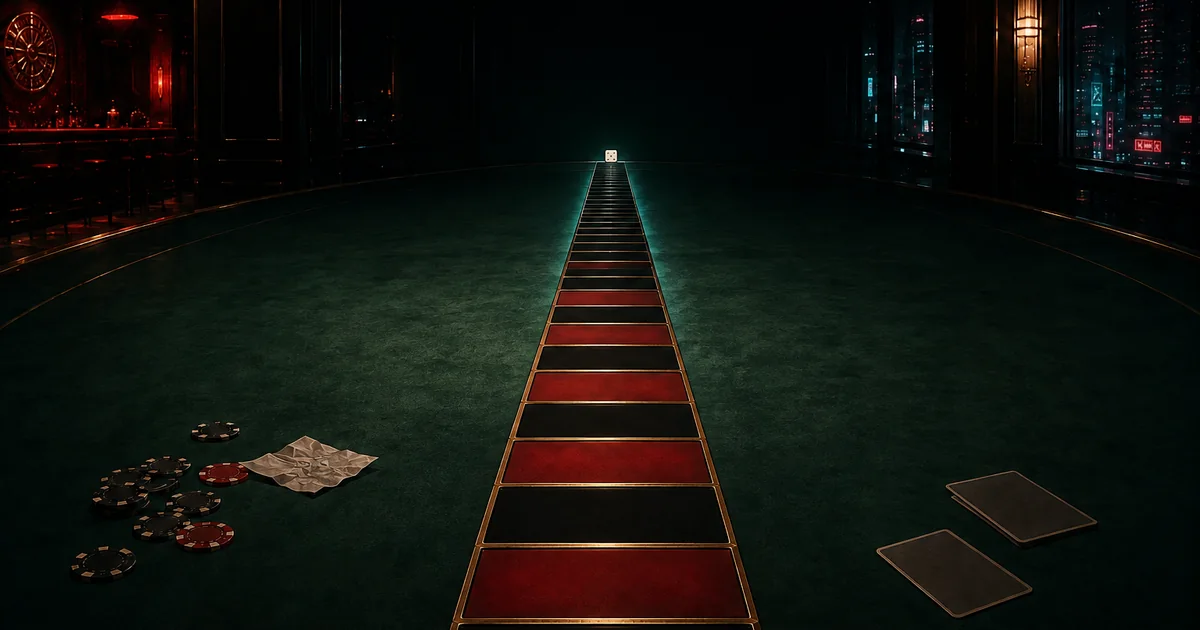
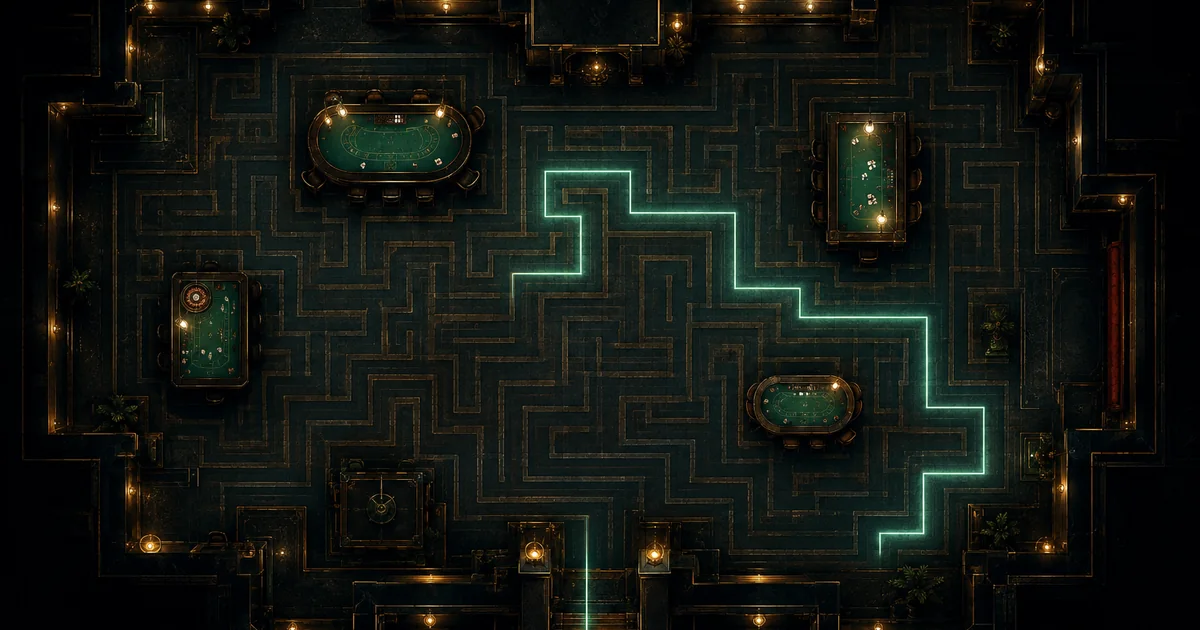
The classic casino floor is not decorated so much as engineered, and the engineering targets the three things that normally make a person stop doing something.
- Time. No clocks on the walls and no windows, so the two ordinary ways of noticing that hours have passed are both absent. Lighting stays constant, so the room feels the same at 3am as at 3pm.
- Exit. Layouts that curve, with no long sightline to a door. Leaving stops being a single decision and becomes a series of them, each one taken while walking past something else to play.
- Money. Chips. Converting cash into tokens is the oldest trick in the building, and it works because a token does not feel like rent. Everything downstream is denominated in an abstraction.
None of this is secret and none of it is illegal. It is worth being precise about what the objection is: an environment optimised to remove stopping cues is not fraud, but it is a thumb on a scale that the player did not know was there.
The exact translation to a screen
A common assumption is that online play escapes all this because you are in your own home with a clock in the corner of the screen. The levers survived the move — they simply changed form, and mostly got stronger.
| LEVER | ON A FLOOR | ON A SCREEN |
|---|---|---|
| Time | No clocks, no windows | No session length shown; no natural end to a round |
| Exit | Curved layouts, no sightline to a door | No queue, no closing time, one tap to play again |
| Money | Cash becomes chips | Balance becomes a number; deposits are two taps |
| Pace | Dealer speed, other players | You set it — and it is far faster than any table |
The last row is the one that matters most and gets discussed least. A blackjack table deals perhaps sixty hands an hour. A screen can resolve a round in a couple of seconds, and an autoplay feature removes even the decision to continue. Whatever a game’s edge is, pace multiplies it — the same percentage applied many times more often.
The near-miss, and why it is not a bug
A reel game stopping one symbol short of a jackpot produces a measurably different response from a plain loss, even though both pay exactly nothing. The near-miss reads as progress rather than failure.
The honest complication is that near-misses are not necessarily engineered. On a fair reel game they fall out of ordinary randomness — with enough symbols, screens that *almost* pay are simply common. Our own Tairyō generates them purely because lines pay left-to-right from reel one, which makes a full-looking screen worth nothing surprisingly often.
What separates a designed near-miss from an emergent one is whether the reels are weighted to produce them more often than chance would. That is the line, and it is exactly the sort of thing a published paytable and verifiable rounds are for — you can check whether the game you are playing is the game you were shown.
What actually works against it
The countermeasures are unromantic, and they work by putting the decision somewhere the environment cannot reach — which means before you start, and outside the interface.
- Set the end before the beginning. A budget and a time, decided while nothing is at stake. A decision made in advance is the only kind the room has no influence over.
- Reinstall the missing cue. A phone alarm across the room restores the clock the environment removed. It sounds trivial; it is the single most effective thing on this list.
- Keep money feeling like money. Withdraw winnings rather than letting a balance accumulate into an abstraction. A number on a screen is the modern chip.
- Slow the pace deliberately. Turning off autoplay and fast modes reduces the number of times the edge applies, which is the one variable that scales your total cost.
- Use the platform’s own limits. Deposit caps, session reminders and self-exclusion exist precisely because in-the-moment decisions are the ones the environment is designed to shape.
The reason to publish this at all is straightforward. A house that benefits from an environment can either say nothing about how it works, or describe it and give players the tools to push back. The first is more profitable per session. The second is the only one compatible with claiming the game is fair, since a fair game inside an environment engineered to prevent you leaving is not really a fair proposition.
Set the terms yourselfA game with no round timer, no autoplay pressure and a published edgeDice →
Why are there no clocks in casinos?
Because time awareness is one of the main cues that prompt people to stop. Removing clocks and windows removes the two ordinary ways of noticing how long you have been playing.
Does online play avoid casino floor psychology?
No — the same levers exist in different form. There is no closing time, no queue, one tap to play again, and the pace is far faster than any physical table, which multiplies the effect of the house edge.
Are near-misses deliberately engineered?
Not necessarily. On a fair game they arise naturally from how paylines are evaluated. What matters is whether reels are weighted to produce them more often than chance would — which is what published paytables and verifiable rounds let you check.
What is the single most effective countermeasure?
Deciding your budget and your stopping time before you start, and setting an alarm outside the interface. Decisions made in advance are the only ones the environment cannot influence.
- Long-documented casino environmental design practice (absence of clocks and windows, layout, chip abstraction) and the near-miss effect in gambling psychology