
What a near miss is
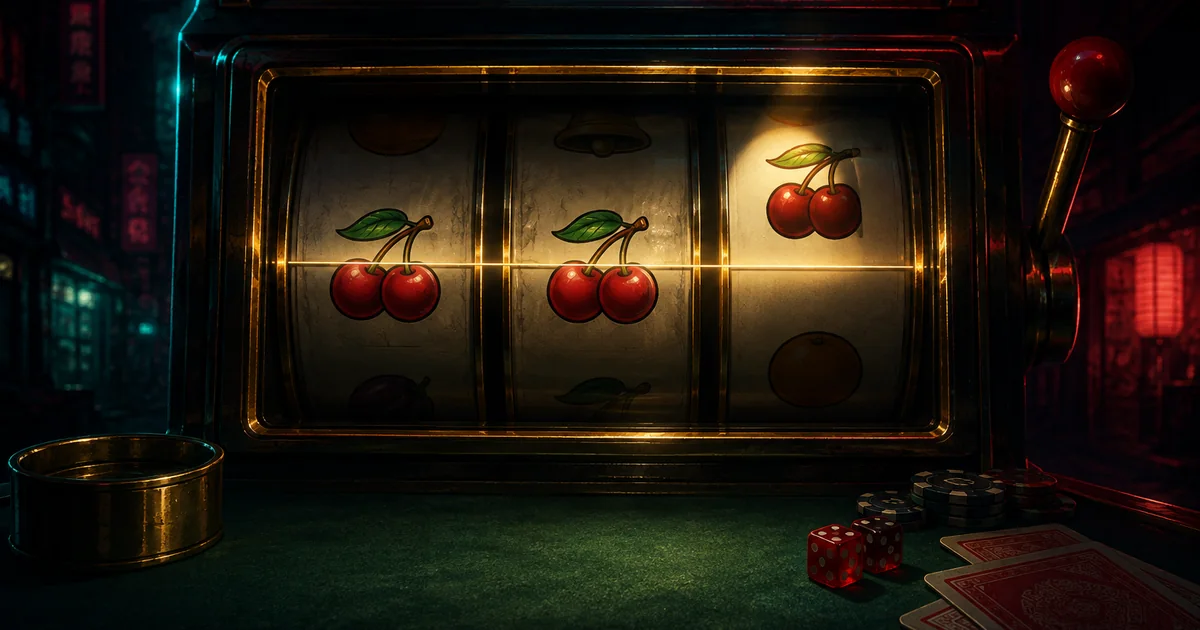
Stop a fruit machine one symbol short of the jackpot and something odd happens: you lost, exactly as completely as if the reels had shown nothing, yet it does not feel like nothing. It feels like a signal — the win is *around here somewhere*. That feeling has a name in the research literature, the near-miss effect, and it is one of the oldest documented quirks in the psychology of gambling.
B.F. Skinner remarked on it in the 1950s: a machine that stops just short of paying is, in his terms, reinforcing behavior without paying for it. The first systematic treatment came from R.L. Reid in 1986, who defined the near miss as a failure that is structurally close to a success — and observed that closeness of display is doing the psychological work, because in outcome terms there is no such thing as close. A lottery ticket one digit off pays the same as one that shares no digits: zero.
The definition matters because it separates two things the mind merges. In games of skill, nearly succeeding genuinely is information — a dart just off the bullseye says your aim is almost calibrated. The near-miss effect is that machinery firing in a domain where it has nothing to grip: a game of independent chance, where the previous spin’s geometry predicts the next one’s no better than a roulette streak predicts red.
What the research shows
Three findings recur across the literature, and together they explain why the effect is worth an article rather than a footnote.
- Near misses extend play. In controlled slot-machine experiments, players dealt losses dressed as near misses persist longer than players dealt plain losses. Kassinove and Schare’s 2001 study found the effect strongest when about 30% of losses were near misses — enough to keep the signal alive, not so many that it wore out.
- The brain treats them partly as wins. Clark and colleagues’ 2009 imaging study found near misses activating parts of the same reward circuitry that genuine wins do — while being rated, by the same participants, as *more unpleasant* than full misses. Losing by a hair feels worse and motivates more, at the same time.
- The effect needs agency to bite. The same research line found near misses most potent when the player had some involvement — choosing when to stop, picking the numbers. Illusory control and the near miss compound each other: it almost worked, *and I almost did it right*.
None of this means a person who feels the pull is broken. The effect appears in ordinary players in laboratory settings; it is the standard machinery of learning from near-success, operating on inputs it was never built for. The finding is not that some people misread near misses. It is that people do.
The anatomy of a tease, measured on our own reels
Our slot Hanabi launches its free-spin round when three or more 祭 scatter symbols land across fifteen cells. The near miss here has a precise shape: two 祭 on screen, the round over, the third conspicuous by absence. How often does that happen? On these reels, that is not a rhetorical question.
The point of the arithmetic is what it rules out. Nothing in the engine watches your spin, notices a loss and arranges two scatters to console you: each cell is drawn independently, and the whole grid replays from the committed seed pair — you can recompute any spin yourself. The tease happens six times as often as the trigger for the same reason two heads in three coin flips happen more often than three: it is the shape of independent chance, not choreography.
That distinction — near misses that fall out of the math versus near misses that are put there — is where the ethics of the subject actually live. Regulators in several jurisdictions have acted against machines engineered to *display* near misses more often than their odds produce them: reels weighted so the jackpot symbol crowds the payline’s neighbors, stopping routines that steer just short. A game whose teases are exactly as frequent as independence implies is playing fair with your dopamine; a game that manufactures extra ones is hiding a price signal in a feeling.
Living with a brain that keeps score this way
The near-miss effect does not switch off once named — imaging studies suggest the response persists even in players who know the odds. What knowledge changes is what you do with the feeling. Three habits follow directly from the research:
- Treat “that was close” as a description of the picture, not the probability. The display was close; the outcome was a loss identical to any other. If a session budget was going to end the session, a near miss is not a reason it should not.
- Notice the urge to continue *specifically after* a near miss. That timing is the effect’s signature. The stopping rules in our responsible-play toolkit work precisely because they are set before the feeling arrives.
- Prefer games that show you their mathematics. A published paytable and a verifiable draw do not blunt the feeling, but they let you check that no one is manufacturing it.
And the honest limit, stated plainly: this article is science journalism, not clinical advice. If gambling has stopped feeling like entertainment priced in advance — if the near misses are doing the deciding — the resources below are free, confidential and staffed by people whose job this is.
The reels this article measuredHanabi: fifteen independent draws, every spin recomputable from its seed pairHanabi →
What is the near-miss effect in gambling?
The tendency for losses that look close to a win — two of three jackpot symbols, a lottery number one digit off — to feel meaningful and motivate continued play, even though in a game of independent chance they carry no information about future outcomes.
Does a near miss mean the win is close?
No. In an independent-draw game the outcome is decided fresh each round. On our Hanabi reels, two scatters landing changes nothing about the third: every cell is a separate weighted draw at the same odds, every round.
Do slot machines manufacture near misses?
Some historically did, weighting reel displays so near misses appeared more often than the true odds produce them, and regulators have acted against the practice. Hanabi’s teases occur at exactly the rate independent draws imply — about 7.3% of spins show two scatters, versus 1.2% for the three that trigger free spins — and any spin can be recomputed from its committed seed pair.
Why does almost winning feel worse and yet make people keep playing?
That paradox is the core research finding: near misses are rated more unpleasant than full misses while recruiting some of the same reward circuitry as wins. The discomfort and the motivation arrive together, which is what makes the effect worth knowing about by name.
- R.L. Reid, “The psychology of the near miss”, Journal of Gambling Behavior (1986)
- Kassinove & Schare, “Effects of the near miss and the big win on persistence at slot machine gambling”, Psychology of Addictive Behaviors (2001)
- Clark, Lawrence, Astley-Jones & Gray, “Gambling near-misses enhance motivation to gamble and recruit win-related brain circuitry”, Neuron (2009)
- B.F. Skinner, Science and Human Behavior (1953) — the early observation on near reinforcement
- BeGambleAware — free, confidential gambling support