
6-6-6
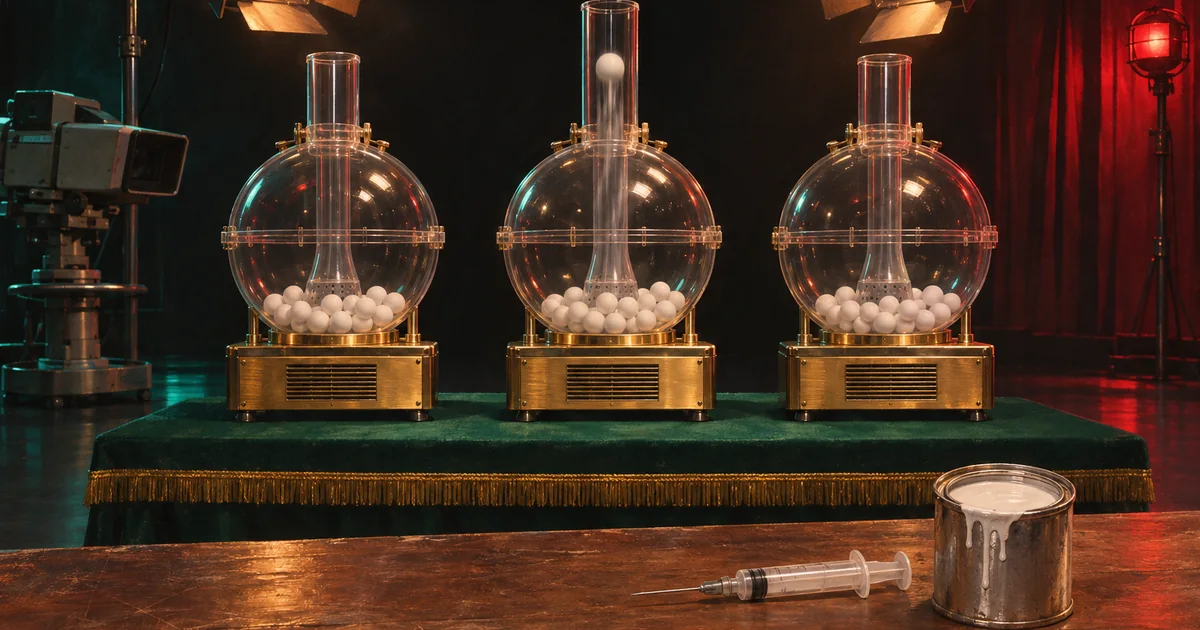
Shortly after seven on the evening of 24 April 1980, Pennsylvanians watching the Daily Number saw three air-blown machines, each holding ten ping-pong balls numbered 0 to 9, release one ball apiece up a clear tube. The first was a 6. So was the second, and the third. The host, Nick Perry, read out the number with his usual cheer. A record $3.5 million was paid on that drawing.
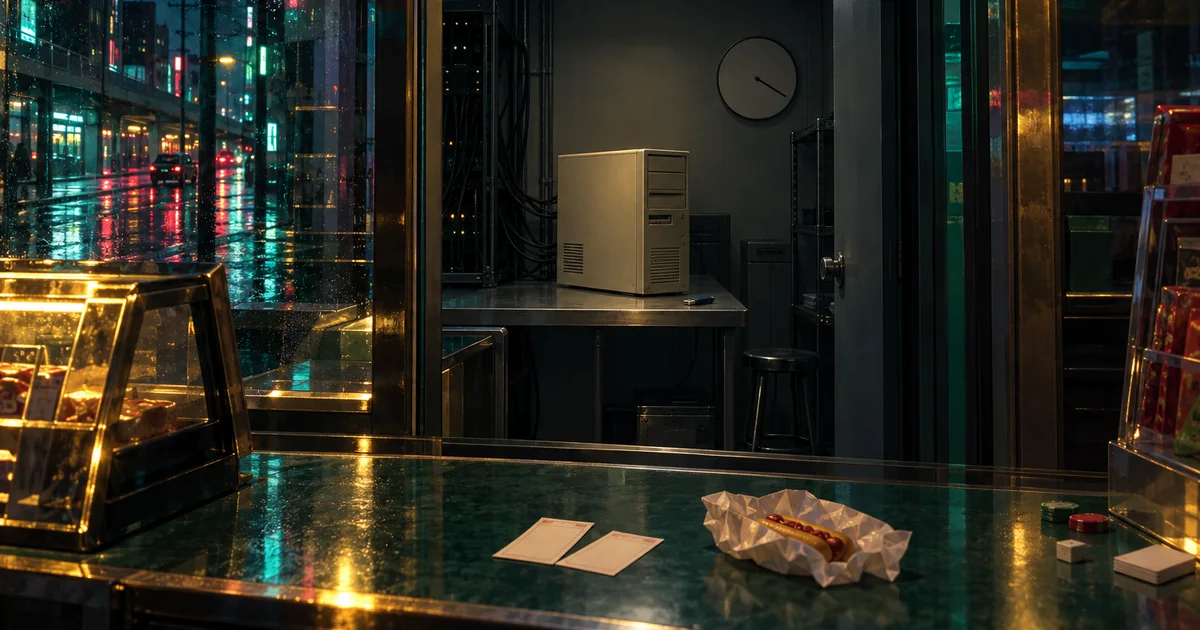
Perry, born Nicholas Katsafanas, had been a Pittsburgh broadcaster for three decades, best known for Bowling for Dollars, and had hosted the lottery drawing since 1977 from the studios of WTAE. The machines and balls were kept in a room there, locked with two keys: one held by the station side, which in practice meant Perry, and one by the lottery’s own official, Edward Plevel. The balls were checked by an independent laboratory and allowed a variation of 1.75 milligrams in mass.
With Plevel’s cooperation, Perry had a WTAE art director, Joseph Bock, buy matching ping-pong balls and letter three replica sets by hand. They tried baby powder, talc, sugar and Vaseline before settling on a few drops of white latex paint injected through a syringe, enough that a ball would not rise into the tube. Every ball was weighted except the 4 and the 6. On the night, a stagehand, Fred Luman, swapped the weighted sets into the machines and swapped them out again afterwards; Bock burned them in a paint can within the hour.
What the weighting did
An honest Daily Number has 1,000 equally likely results, 000 to 999. A $1 straight bet paid $500, so the lottery returned 50 cents of every dollar on average and kept the rest, much of it for programmes for older Pennsylvanians. Leave only two light balls in each machine and the thousand results become eight: 444, 446, 464, 466, 644, 646, 664 and 666.
| DRAW | NUMBERS | CHANCE | WORTH |
|---|---|---|---|
| honest | 1,000 | 0.1 % | $0.50 |
| fixed | 8 | 12.5 % | $62.50 |
Calculation for this article: worth = $500 × chance. The fixed row assumes the eight combinations were equally likely; the record shows only that 4s and 6s were the balls light enough to rise.
That is the whole economics of a rigged random draw. Nothing about the prize changed and nothing about the ticket changed; the number of possible outcomes fell by a factor of 125, and with it the price of certainty. A player who bought all eight combinations for $8 was guaranteed $500.
Perry could not buy tickets himself. Two partners in a vending-machine business, the brothers Peter and Jack Maragos, did, driving between small shops across the state on the day of the drawing. The Hustle’s account of the case puts their purchases at about 14,000 one-dollar tickets, roughly 2,400 of them on 666 and the rest spread over the other seven combinations.
| IF IT DRAWS | TICKETS | PAYS |
|---|---|---|
| 666 | ≈ 2,400 | ≈ $1.2M |
| any other | ≈ 1,660 | ≈ $0.83M |
| expected | 14,000 in | ≈ $0.88M |
Assumes the 11,600 tickets not on 666 were spread evenly over the other seven combinations. Honest, the same $14,000 would have been expected to return $7,000.
Caught by the bets
On television nothing looked wrong. The reporter who covered the case for the Pittsburgh Press later told WESA that at full speed, and without knowing what to look for, the weighted balls did not look obviously different. What looked wrong was the money.
An honest draw spreads the public’s bets across a thousand numbers, and no number takes a large share. On 24 April an unusual share of the state’s Daily Number tickets sat on the eight combinations of 4 and 6, and the street knew it. Pittsburgh’s illegal numbers games used the state’s Daily Number as their own result and paid 600 to 1 against the lottery’s 500; their biggest operator, Tony Grosso, heard the drawing had been fixed and announced he would not pay his winners. The conspirators, as the Press reporter put it, had let a lot of people in on the fix beforehand. On 30 April the state’s revenue secretary said there was no evidence the game had been rigged. A grand jury thought otherwise.
Investigators worked back from the outlets where the brothers had bought tickets, and phone records led to the announcer’s booth at WTAE. The brothers testified for the prosecution. Plevel was convicted and served two years; Bock, Luman and another man pleaded guilty. Perry was convicted on 20 May 1981 of conspiracy, theft by deception, rigging a publicly exhibited contest and perjury, was sentenced to seven years, served two at Camp Hill and a third in a halfway house, and died in 2003 without admitting his part. Most of the money was never paid out.
Whoever can touch the randomness
Pennsylvania’s answer was procedure. The drawings moved to Harrisburg; today a minimum of six people, including two certified public accountants and two senior-citizen witnesses, open a locked cabinet whose combination only the accounting firm holds, in a room with biometric entry and cameras, and the lottery runs nine pre-draws, three rehearsal draws, a verification draw and two post-draws before and after the sixty seconds on air. The Multi-State Lottery Association’s director told TribLive that big-jackpot games stopped using ping-pong balls altogether because they could be tampered with.
All of that guards the same weak point: a physical source of randomness that a person can reach. Eddie Tipton did it with code inside the random number generator; the Tran Organization did it with a dealer’s hands; Perry did it with a syringe. In each case the draw looked random to everyone watching, and the only defence was trusting the people near it.
A provably fair round moves the weak point. The house commits to its server seed before the round, by publishing a fingerprint of it; the player adds a seed of their own; the result is a public function of both. There is no ball to weight, because there is nothing physical between the commitment and the result. What a hash commitment proves sets out exactly what that guarantee covers and the three things it does not.
The rest of the Triple Six Fix is a reminder of what the guarantee is for. The conspirators were not caught by a laboratory. They were caught because a fixed draw produces an unnatural pattern somewhere, and here it was in the money: too many people, told too much, betting on eight numbers out of a thousand. A draw derived from a committed seed does not need to be caught.
A draw with no ball to weight9,999 equally likely results from a committed seed and yours, by a published ruleDice →
What was the Triple Six Fix?
The rigging of the Pennsylvania Lottery’s televised Daily Number on 24 April 1980. Every ping-pong ball except the 4s and 6s was weighted with latex paint, so only eight three-digit numbers could come up; the draw produced 666.
Who rigged the 1980 Pennsylvania Lottery?
The drawing’s host, Pittsburgh broadcaster Nick Perry, with lottery official Edward Plevel, art director Joseph Bock, stagehand Fred Luman and the brothers Peter and Jack Maragos, who bought the tickets. Perry was convicted on 20 May 1981 and served two years in prison.
How did weighting the balls change the odds?
It cut the possible results from 1,000 to 8. A $1 straight ticket that paid $500 went from a 1-in-1,000 chance, worth $0.50, to about a 1-in-8 chance, worth about $62.50 — 125 times as much (calculation for this article).
How was the Pennsylvania lottery fix discovered?
Through the betting pattern. An unusual share of tickets sat on the eight combinations of 4 and 6, too many people had been told in advance, an illegal numbers operator refused to pay, and phone records led investigators to the announcer’s booth.
Could a provably fair game be rigged the same way?
Not by weighting the draw. A provably fair result is a public function of a server seed committed before the round and the player’s own seed, with nothing physical between the commitment and the result. The guarantee covers the result, not the custody of funds.
- Wikipedia, “1980 Pennsylvania Lottery scandal” — the conspirators and their roles, the two-key room, the 24 April 1980 drawing and $3.5 million payout, the 20 May 1981 conviction and sentence, the move of the drawings, the phone records
- Pennsylvania State Police Historical, Educational and Memorial Center, “Lottery” exhibit — balls weighted with latex paint for every number except 4 and 6, the drawing tapes, $1.8 million claimed of the $3.5 million paid
- TribLive, “666 an infamous mark of state lottery fix in 1980” — the two keys, the substances tried before white latex paint, the end of ping-pong balls for big jackpot games, two years in prison
- 90.5 WESA, “Triple Six Fix: How Rigging The PA Lottery Inadvertently Contributed To Its Success” — the Pittsburgh Press reporter’s account, 500 to 1 against the numbers racket’s 600 to 1, Tony Grosso, the 30 April denial, $1.2 million, today’s drawing procedures
- The Hustle, “The local TV star who rigged the lottery” — the 1.75 mg tolerance, the replica sets, about 14,000 $1 tickets with about 2,400 on 666, the eight combinations
- KYW Newsradio / CBS Philadelphia, “KYW Flashback: Rigging the Pennsylvania Lottery” — eight number combinations, the $1.8 million figure
- Betkyo engine source: OriginalBaseDiceService.kt (9,999 equally likely results from the committed server seed and the client seed)
- Calculation for this article: honest and fixed ticket values ($500 × chance), the crew’s payout by outcome and its expectation under equal combination chances