
Two hot dogs, a soda, and a $14.3 million ticket
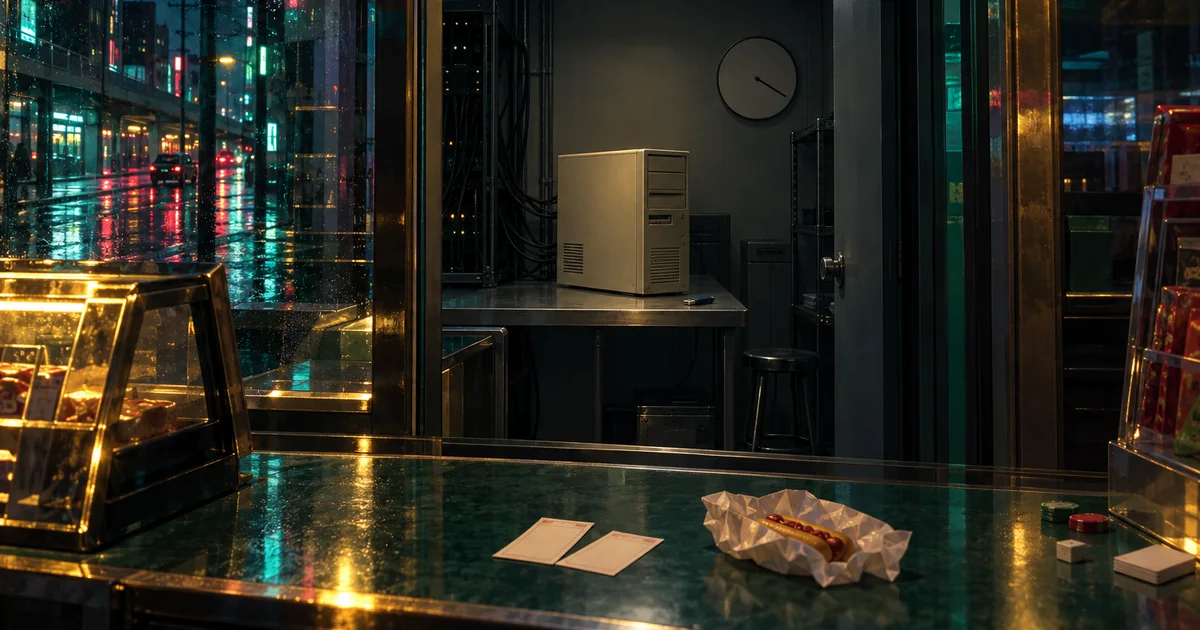
The surveillance tape from the QuikTrip on Des Moines’ east side shows a large man in a hooded sweatshirt at about 3:30 in the afternoon, two days before Christmas 2010, paying for $3.17 of hot dogs, a fountain drink and two Hot Lotto tickets. Six days later, on 29 December 2010, one of those tickets matched all five numbers and the Hot Ball. The jackpot was $14.3 million in cash, $16.5 million as an annuity. Nobody came forward.
The claim arrived with hours to spare. Iowa tickets expire after a year; on 29 December 2011, an hour and fifty minutes before the deadline, lawyers at a Des Moines firm presented the ticket on behalf of a trust called Hexham Investments, registered in Belize, whose trustee, a New York lawyer named Crawford Shaw, had spelled it “Hexam” on the paperwork. The claim was turned away. In January 2012 Shaw met lottery officials in person; Iowa does not pay anonymous winners, Shaw would not say who had bought the ticket, and on 26 January 2012 he signed an affidavit and withdrew. The $14.3 million went back to the players’ pool. The lottery released the QuikTrip tape and asked the public who the man in the hoodie was.
| DATE | EVENT |
|---|---|
| 20 November 2010 | Tipton enters MUSL’s sealed draw room to adjust the generator’s clock for daylight-saving time; the room camera is recording about one second per minute |
| 23 December 2010 | Two Hot Lotto tickets bought at a Des Moines QuikTrip, about 3:30 p.m. |
| 29 December 2010 | Draw: one ticket wins the jackpot, $14.3 million cash / $16.5 million annuity |
| 9 November – 29 December 2011 | Claims by a lawyer, then by the Belize-registered Hexham Investments Trust; the final attempt comes 1 h 50 min before expiry and is rejected |
| 26 January 2012 | Trustee Crawford Shaw withdraws the claim rather than name the buyer; the prize is forfeited |
| 15 January 2015 | Tipton arrested on two fraud counts after the tape and a colleague’s voice identification |
| 20 July 2015 | Convicted on both counts; sentenced in September to ten years, pending appeal |
| June 2017 | Iowa Supreme Court vacates the convictions (statute of limitations); the same month Tipton pleads guilty to ongoing criminal conduct and confesses to installing the code around 2005–2006 |
| 22 August 2017 | Sentenced to 25 years, the maximum; about $2.2 million in restitution to Colorado, Oklahoma, Wisconsin and Kansas |
| July 2022 | Paroled after five years |
Dates from the Iowa case record as reported by the Des Moines Register, the Associated Press, The Daily Beast (7 July 2015) and CNN (22 August 2017). The Wikipedia summary of the case gives the cash value as $14.3 million and the advertised prize as $16.5 million; both figures appear in contemporary reporting.
The man in the hoodie was Eddie Tipton, who could not legally buy a lottery ticket at all. As MUSL’s information security director he was one of five people with access to the draw room, and he had helped write the software inside it. A colleague recognised his voice on the tape. The prosecution’s theory at the 2015 trial was that on 20 November 2010 he had used the clock adjustment as cover to plug in a USB stick carrying a self-deleting program, and that the camera, set to record one second in sixty, had been arranged not to see it. The defence said the cameras had a history of faults and no malware was ever found. The jury convicted; the Iowa Supreme Court threw the convictions out two years later on the statute of limitations; and then Tipton, facing charges in five states, stood up in court and explained what he had actually done.
Three dates a year, after eight o’clock
The code was found not in Iowa, where the drives had been wiped, but in Wisconsin. In 2016 investigators examining the generator used for that state’s Megabucks draw found segments of code added after the software had been reviewed and certified. On three dates in the year, 27 May, 23 November and 29 December, if the date fell on a Wednesday or Saturday (the draw days) and the draw ran after 8 p.m., the generator did not draw at random. It ran what the investigators called a multi-variable algorithm whose output the author could reproduce. On every other day of the year it was exactly the random number generator the auditors had signed off.
Look at the list of jackpots then. Colorado, 23 November 2005: $568,990, Tipton’s brother Tommy’s share of a $4.5 million prize, on a generator Eddie had helped build. Wisconsin, 29 December 2007: $783,257, paid to a company controlled by Robert Rhodes, a friend from Texas who later moved money to Tipton. Kansas, 2010. Iowa, 29 December 2010: the $14.3 million that was never paid. Oklahoma, 23 November 2011: $1.2 million. Every one of them on 23 November or 29 December. The dates were the signature; the reason nobody read it for six years is that nobody was looking at a list of dates. They were looking at a certified random number generator.
| SITUATION | JACKPOT ODDS PER TICKET | TICKETS TO COVER |
|---|---|---|
| Hot Lotto, 5 of 39 plus 1 of 19, honest draw | 1 in 10,939,383 | 10,939,383 |
| Honest draw, 362 days of the year | 1 in 10,939,383 | 10,939,383 |
| 27 May, 23 November, 29 December on a Wednesday/Saturday after 8 p.m., author of the code | 1 in 1 | 1 (he bought 2) |
| Same dates, everyone else | 1 in 10,939,383 | 10,939,383 |
C(39,5) × 19 = 575,757 × 19 = 10,939,383 for the matrix Hot Lotto used until May 2013. A player who can reproduce the generator’s state does not have better odds; he has the answer. The other 362 days were, as far as anyone has shown, honest, which is why the generator passed every audit it was given.
There is a detail here that matters more than the rootkit. A random number generator is a function: seed in, numbers out. Certification checks the function; it cannot check who chose the seed, or whether the function quietly uses a different one on three nights a year. The Wisconsin code did not break randomness. It replaced it, briefly, with something that looked identical from outside and was fully determined from inside, and then went back to being random before anyone checked. Every test of the output, before or after, would pass.
The question an audit cannot answer: who chose the seed?
The case was broken by a claims clerk, a misspelt trust and a convenience-store camera, not by anything in the draw. That is the uncomfortable part. MUSL ran a sealed room, a certified generator, a five-person access list and a surveillance camera, and the person responsible for all four was the attacker. After the arrest the Iowa Lottery announced new draw equipment and software, new cameras, new draw-room protocols and “separation of duties”, which is the honest phrase for the problem: the same person had written the function, held the keys and set the camera. Hot Lotto itself was retired in October 2017.
The structural fix is not a better camera. It is to take the choice of the seed away from anyone who can see the outcome. In a provably fair game the operator publishes a hash of its seed before the bet; the player supplies a seed of their own; and every round’s number is a keyed hash of the two together with a counter. An insider who wrote the function and holds the server seed still cannot pick the result, because the player’s seed arrives after the commitment and the operator cannot change its own seed without breaking the published hash. Tipton’s three dates a year would have been impossible under that rule, not because the code could not be written, but because the seed he needed to know was not his to choose.
None of this is a claim that a provably fair casino is more trustworthy than a state lottery; it is the smaller claim that the seed is not the house’s alone to choose, which in the lottery it was. Tipton’s jackpots were only ever as random as the one man allowed in the room, and the room was built so that nobody could tell. A public commitment and a seed the house does not choose would have left him with the same odds as everyone else: one in 10,939,383, on every date in the year.
The seed is not the house’s to chooseHash committed before the bet, your seed in the mix — no single party fixes the rollDice →
Who was Eddie Tipton?
The information security director of the Multi-State Lottery Association, which ran Hot Lotto and other multi-state games, and one of the programmers of its random number generator. He bought the winning ticket for the 29 December 2010 Iowa Hot Lotto draw, a $14.3 million jackpot that was never paid because the claim came through an anonymous Belize trust that withdrew rather than name him.
How did he rig the draw?
Forensic examination of a sister generator in Wisconsin found code added after certification that, on 27 May, 23 November and 29 December, if the date fell on a Wednesday or Saturday draw after 8 p.m., replaced the random draw with numbers he could compute. In June 2017 he confessed to installing it around 2005–2006. Prosecutors had earlier argued he used a draw-room visit on 20 November 2010, with the camera recording one second per minute, to install a self-deleting program.
Which jackpots were involved?
Colorado, 23 November 2005 ($568,990 share, claimed by his brother Tommy); Wisconsin, 29 December 2007 ($783,257, via a company of Robert Rhodes); Kansas, 2010; Iowa, 29 December 2010 ($14.3 million, forfeited); Oklahoma, 23 November 2011 ($1.2 million). All on 23 November or 29 December.
What was the sentence?
Convicted in July 2015 and sentenced to ten years; the convictions were vacated in June 2017 on the statute of limitations; he then pleaded guilty to ongoing criminal conduct and was sentenced on 22 August 2017 to 25 years, the maximum, with about $2.2 million in restitution split among Colorado, Oklahoma, Wisconsin and Kansas. He was paroled in July 2022 after five years.
Could this happen to a provably fair game?
Not by this route. The operator commits to its seed with a published hash before the bet, the player supplies their own seed afterwards, and the result is a function of both, so an insider who wrote the code and holds the server seed still cannot pick the outcome. What remains possible is a server that does not honour its commitment, which is why the hash is published first and the player’s seed is theirs to set.
- The Daily Beast — M.L. Nestel, “Inside the Biggest Lottery Scam Ever” (7 July 2015): the QuikTrip purchase ($3.17 of hot dogs, two tickets, ~3:30 p.m.), the one-second-per-minute camera, the 20 November 2010 draw-room visit, the Hexham/“Hexam” claim 1 h 50 min before expiry, the January 2012 withdrawal
- CNN — “Ex-lottery worker who rigged winnings gets 25 years in prison” (22 August 2017): the sentence, the $2.2 million restitution split ($1.1 million Colorado, $644,000 Oklahoma, $391,000 Wisconsin, $30,000 Kansas), the June 2017 plea to ongoing criminal conduct over seven tickets in five states, the $14.3 million Iowa jackpot
- Associated Press via NBC26 — “Brother of jackpot rigger in massive lottery scandal arrested” (2016): the Wisconsin code segments, the $568,990 Colorado share of a $4.5 million jackpot, “each of the six were drawn on either November 23 or December 29th between 2005 and 2011”
- Wikipedia — “Hot Lotto fraud scandal” (summarising the Des Moines Register, AP, Ars Technica and State v. Tipton, 897 N.W.2d 653 (Iowa 2017)): the Wisconsin forensic finding (27 May, 23 November, 29 December; Wednesday/Saturday; after 8 p.m.), the per-state jackpots, the appeal, the 2017 confession, parole in July 2022, the Iowa Lottery’s April 2015 statement
- Wikipedia — “Hot Lotto”: the 5-of-39 plus 1-of-19 matrix used until May 2013 and the Wednesday/Saturday draw schedule
- Betkyo engine source: _shared/seedApi.ts, _shared/demoLocal.ts, _shared/rng.ts (server seed commit, client seed, HMAC-SHA256 per round) and OriginalBaseDiceService.kt (9,999 results, ×1.98 at 50%, 1% edge)
- Calculation for this article: C(39,5) × 19 = 575,757 × 19 = 10,939,383