
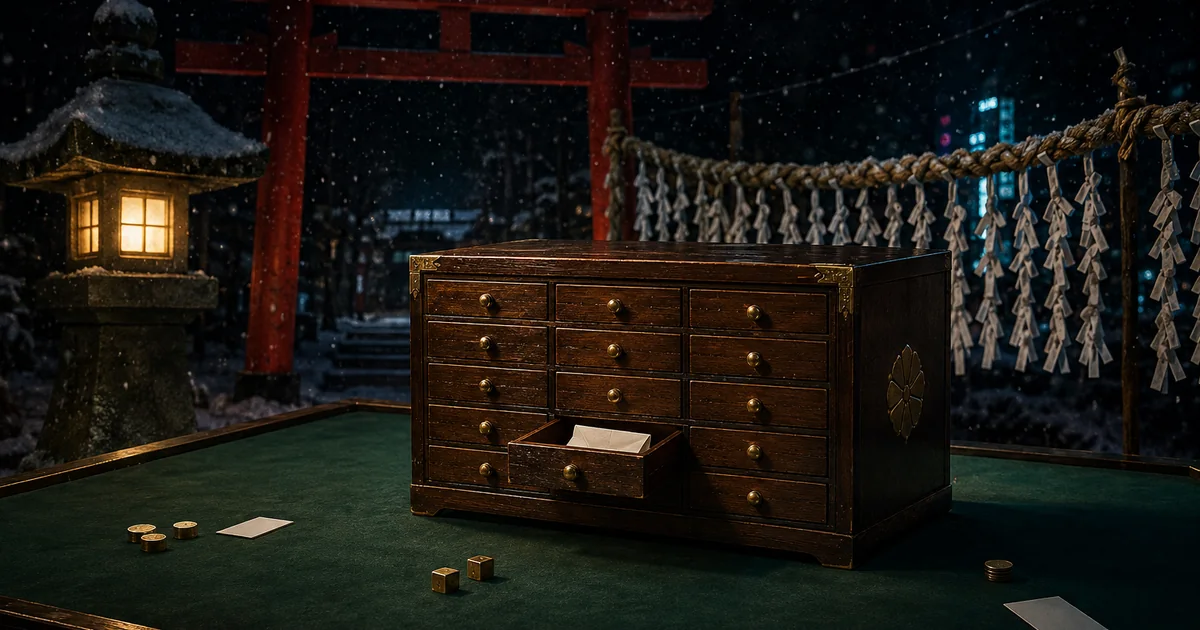
Lots as the voice of the gods
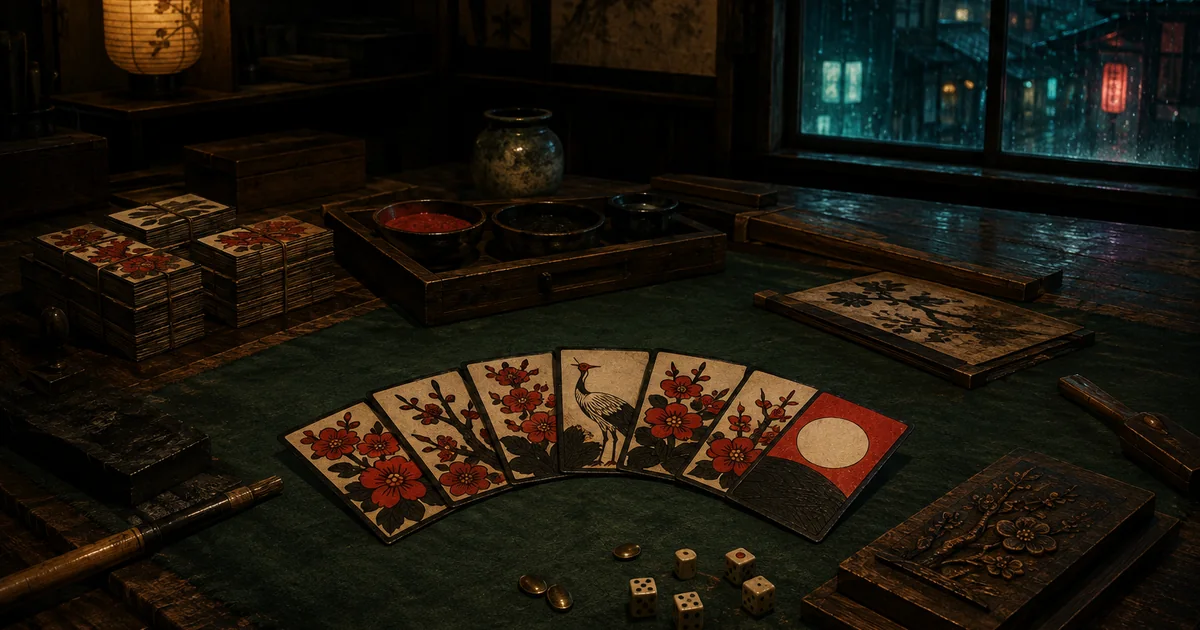
Long before omikuji told fortunes, drawing lots (kuji) was how Japan asked the gods to decide. Villages drew lots to divide land and duties; temples drew lots to choose successors. The logic was theological, not statistical: a decision no human hand could steer was a decision the divine had made.
The most spectacular example sits in 1428, when the Ashikaga shogunate faced a succession vacuum and resolved it by drawing lots before the god Hachiman among four brothers. The winner, Ashikaga Yoshinori, ruled as the “lottery shōgun” (kuji-biki shōgun) — proof of how seriously the mechanism was taken, and a reminder that randomness has been load-bearing in governance far longer than in gaming.
The omikuji format most shrines use today — numbered sticks in a hexagonal box, each mapping to a slip with a ranked fortune and a poem — is traditionally attributed to Ryōgen (912–985), the Tendai abbot remembered as Ganzan Daishi. Edo-period temples spread his hundred-poem lot system nationwide, and the format has barely changed since: shake, draw, read, and decide what to do about it.
Reading the slip
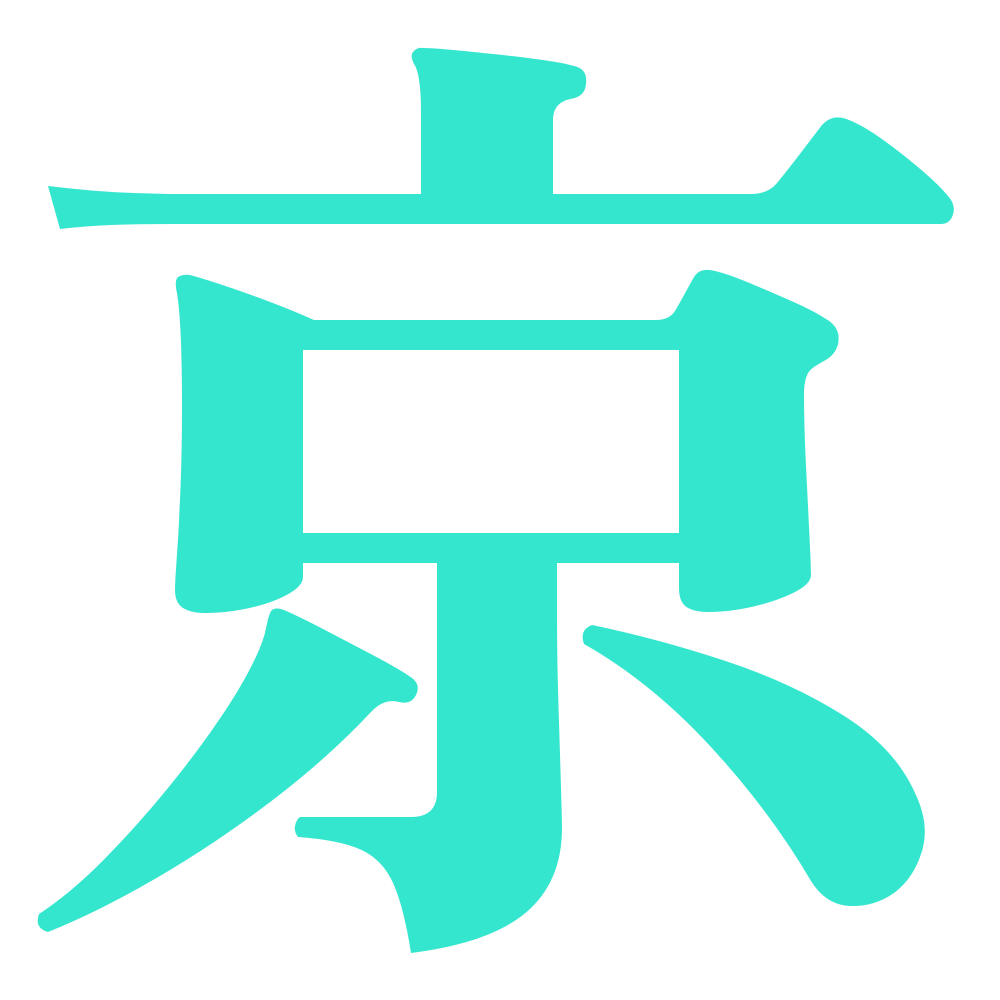
Fortunes are ranked on a ladder that varies slightly by shrine — a common ordering runs 大吉, 中吉, 小吉, 吉, 半吉, 末吉, and then the unwelcome end: 凶 and its variants. Two customs are worth knowing. A bad draw is not carried home: you tie it to a pine tree or rack at the shrine, on the pun that the misfortune should wait (待つ, matsu) by the pine (松, matsu) instead of following you. And the ratios are the shrine’s own choice — Tokyo’s Sensō-ji is famously reported to keep roughly a third of its lots as 凶, on the theory that honest odds make the blessings mean something.
That last point deserves a pause: a thousand-year-old institution understood that a fortune lottery is only meaningful if the bad outcomes are really in the box. Every modern game of chance is a footnote to that idea.
From shrine box to scratch card
Our omikuji game borrows the form directly: nine cells to scratch, and a win when three matching fortune glyphs appear. The tier ladder and its payouts come straight from the engine:
| TIER | READING | PAYS |
|---|---|---|
| 大吉 | Daikichi — great blessing | ×100 |
| 中吉 | Chūkichi — middle blessing | ×20 |
| 小吉 | Shōkichi — small blessing | ×8 |
| 吉 | Kichi — blessing | ×4 |
| 半吉 | Hankichi — half blessing | ×2 |
| 末吉 | Suekichi — blessing to come | ×1.5 |
| 凶 | Kyō — the curse | appears on the card, never pays |
One honest difference from the shrine: we publish the machinery. A shrine’s box ratios are its private theology; our card’s randomness is committed before you scratch and auditable after. Same ritual, opposite secrecy.
Draw a fortune — free, no accountScratch a card with fun money, then verify the draw. Tie the bad ones to a virtual pine at your discretion.Omikuji →
Are omikuji considered gambling in Japan?
No — at a shrine you pay a small offering and always receive a fortune; nothing is staked and nothing is won. It is divination with the mechanics of a lottery, which is exactly why the format adapts so naturally to one.
What should you do with a bad fortune (凶)?
Custom says tie it to the pine or the rack provided at the shrine — the misfortune “waits” there instead of following you home. Keeping a good fortune in your wallet is equally traditional.
Did Japan really choose a shōgun by lottery?
Yes — in 1428, the sixth Ashikaga shōgun was selected by lots drawn before Hachiman from four candidate brothers. Ashikaga Yoshinori is remembered, not always fondly, as the kuji-biki shōgun.
- Omikuji — format and shrine customs
- Ashikaga Yoshinori — the 1428 selection by lot
- Ryōgen (Ganzan Daishi) and the hundred-poem lot tradition — standard temple histories
- Betkyo engine source: omikuji/derive.ts — OMIKUJI_TIERS