
A game of nine, decided by a last digit
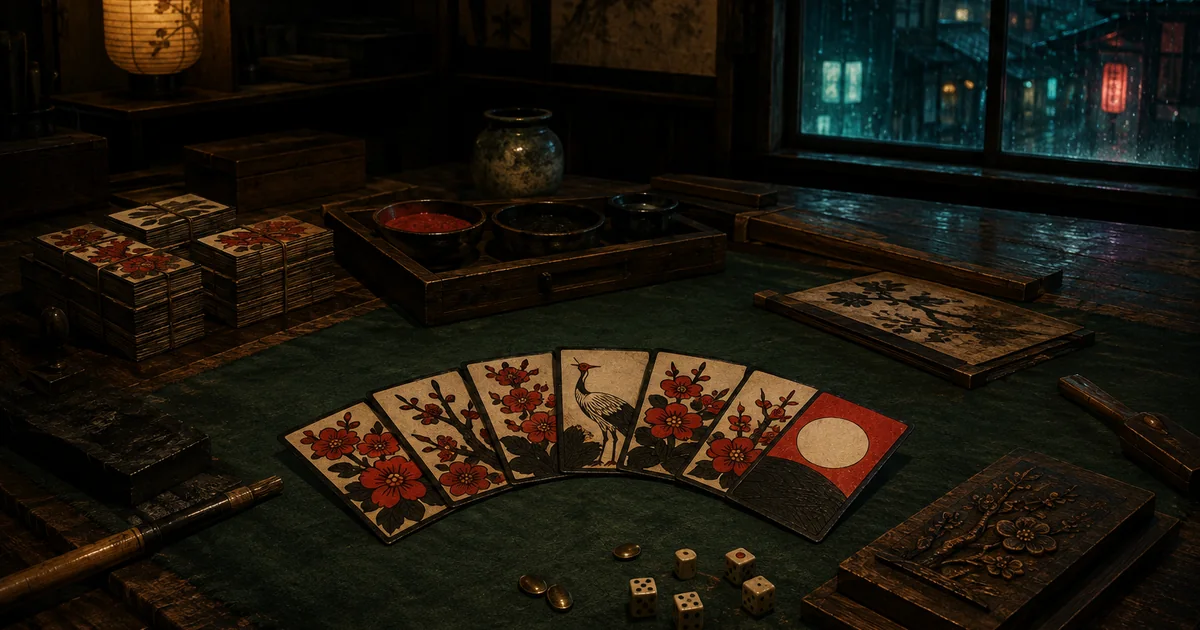
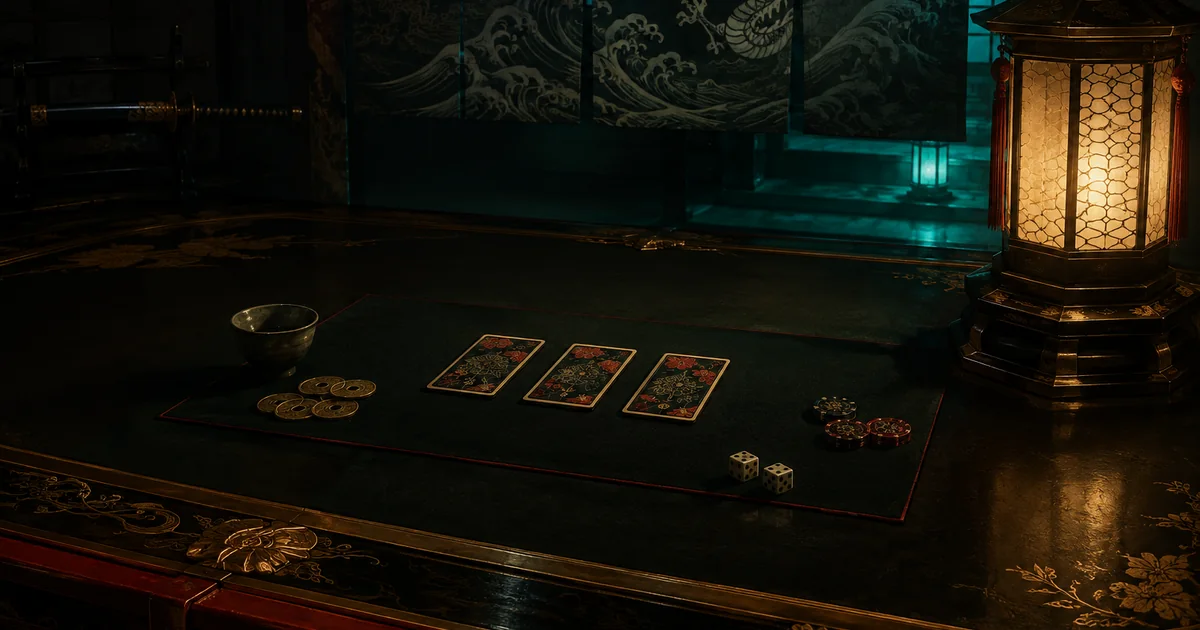
Oicho-Kabu (おいちょかぶ) is played with kabufuda — a Japanese deck of cards numbered one to ten, four of each. The aim is simple enough to explain in a sentence: get as close as possible to a score of nine.
The twist is the counting. Only the final digit of your total matters, so fifteen scores five and twenty scores zero. This is the same mechanic baccarat uses, and if you have played baccarat you already understand the arithmetic — a hand can be ruined by being too good, which is a strange and memorable property for a card game to have.
The name itself is the counting written down: ō-ichō from eight and one, kabu from nine. A game named after its own numbers.
The worst hand in the deck
Three cards, eight and nine and three. It is not a near miss. Eight plus nine plus three is twenty, and twenty ends in zero, which is the lowest score the game allows. There is no consolation in it — the hand is not merely weak, it is the maximally useless outcome.
Japanese has more than one set of numeral readings, and in the older forms used at the gambling tables the three cards are read ya, ku, za. Said together: yakuza.
8-9-3: twenty, which counts as nothing. The good-for-nothing hand.
What makes the etymology persuasive is that it is self-deprecating. It is not a name an enemy invents; it is what a group of people who spent their lives around a gambling table would call themselves — the useless ones, the hand nobody wants. That reading is the standard account, though like most word origins it rests on tradition rather than a document.
From the table to the organisation
The word travelled because the gambling houses did. Edo-period Japan had a class of itinerant gamblers, the bakuto, who ran dice and card games on the edges of legality and organised themselves into groups with bosses, territories and codes of obligation. Those structures are one of the two acknowledged roots of the modern yakuza — the other being the tekiya, the peddlers who worked festival and temple markets.
This is why the vocabulary of Japanese organised crime is full of gambling terms. The organisations did not adopt gambling as a business line; several of them grew out of the games directly, and kept the language.
It is also why Japan’s relationship with gambling is more layered than the modern legal position suggests. Games of chance ran continuously for centuries in a country where they were largely prohibited — at shrines and festivals, in back rooms, on the road. The prohibition shaped who ran them rather than whether they existed.
Why a four-century-old game is still worth knowing
Oicho-Kabu is not widely played today, and the version most people encounter is a stripped-down one. But it left two marks that outlasted it.
- A word that entered the language and then travelled the world, still carrying the shape of a dead card game inside it.
- A counting mechanic — score modulo ten, where excess destroys value — that still runs on casino floors everywhere as baccarat.
The second is the more interesting one for anyone who thinks about game design. Nine-counting is a genuinely unusual idea: most games reward accumulation, and this family punishes it past a threshold. It creates a decision — draw or stand — where more is not obviously better, which is the same tension every modern cash-out game is built around.
Japan’s other gambling classicChinchiro: three dice in a bowl, and the real odds behind itChinchiro →
Does yakuza really come from a card game?
It is the standard and most widely accepted account: 8-9-3 is the worthless hand in Oicho-Kabu, read ya-ku-za in the older numeral forms. Like most etymologies of this age it rests on tradition rather than a dated document.
Why does 8-9-3 score zero?
Oicho-Kabu counts only the last digit of a total. Eight plus nine plus three is twenty, which ends in zero — the lowest score the game has.
Is Oicho-Kabu the same game as baccarat?
Not the same game, but the same counting: score modulo ten with nine as the target. Both descend from a broad family of nine-counting card games rather than one from the other.
What are kabufuda cards?
A Japanese deck numbered one to ten with four of each card, used for Oicho-Kabu and related games — a cousin of the hanafuda flower deck rather than a Western suited pack.
- Standard accounts of Oicho-Kabu rules and the bakuto/tekiya origins of the modern yakuza; the 8-9-3 etymology is the traditional derivation rather than a documented one